CHEXX Crypto Casino Payments: 11 Coins and 9 Networks Explained
CHEXX supports 11 crypto assets in the available payment set: USDT, USDC, SOL, ETH, BNB, TRX, GRAM, POL, BTC, LTC, and TRUMP. Those assets are handled across nine networks: ERC-20, BEP-20, TRC-20, Polygon, TON, Bitcoin, Solana, Litecoin, and TRUMP. For a Philippine player, the most important payment rule is not simply choosing a familiar coin. The asset and the network must match the route shown in the CHEXX cashier before a transfer is sent. For a broader view of the brand, see the CHEXX Philippines review.
CHEXX is crypto-only in the available payment set. PHP is the local currency in the Philippines, but PHP fiat deposits and withdrawals are not part of that CHEXX set. That means this page is about crypto routing, not peso conversion. It does not recommend one coin over another or treat cryptocurrency as a way around banking or regulatory controls. The full picture is in our CHEXX review for the Philippines.
The CHEXX crypto payment set at a glance
| Payment detail | CHEXX set | Why it matters |
|---|---|---|
| Crypto assets | USDT, USDC, SOL, ETH, BNB, TRX, GRAM, POL, BTC, LTC, TRUMP | The ticker alone does not always identify the transfer route. |
| Networks | ERC-20, BEP-20, TRC-20, Polygon, TON, Bitcoin, Solana, Litecoin, TRUMP | The sending wallet and CHEXX cashier must use the same network. |
| PHP fiat cashier support | Not part of the CHEXX payment set | Do not assume a PHP bank or e-wallet balance can be sent directly. |
| Main user risk | Asset or network mismatch | A familiar asset can still be sent through the wrong chain. |
The useful way to read this table is as a routing map. CHEXX has several assets that can be associated with more than one blockchain environment. A payment is therefore a two-part choice: first the asset, then the specific network displayed for that asset in the live cashier.
Why network matching matters more than the ticker
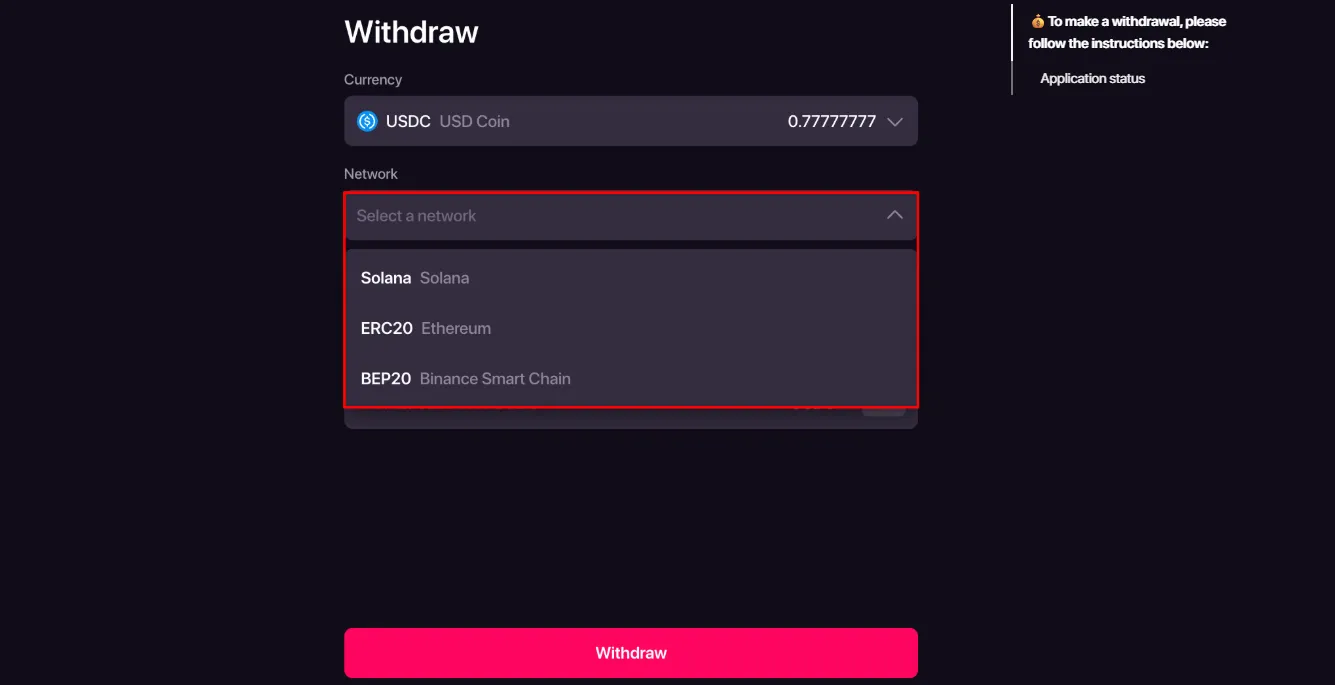
Crypto wallets often show the same asset name across different networks. USDT is the clearest example of why that can be confusing. A sender can see “USDT” in a wallet and assume that the asset name is enough, while the receiving service can require a particular network for the deposit address it generated. The transfer route is not interchangeable just because the ticker is identical.
The practical check is simple: compare the network on the CHEXX deposit screen with the network selected in the sending wallet. If the cashier presents an ERC-20 route, use the matching ERC-20 option on the sending side. If it presents TRC-20, use TRC-20. The same principle applies to BEP-20, Polygon, TON, Solana, Bitcoin, Litecoin, and the other supported routes.
Five checks before confirming a crypto transfer
- Select the intended asset inside the live CHEXX cashier.
- Read the exact network shown for that asset.
- Confirm the sending wallet supports that same network.
- Copy the live destination details carefully, including any memo or tag if one is displayed.
- Review asset, network, address, and amount together before sending.
This is not a speed optimization. It is a basic routing check. Choosing a different network because it looks cheaper or more familiar can create a mismatch with the receiving address. CHEXX does not guarantee transaction speed in the available information, so this guide does not rank networks by expected confirmation time.
How the 11 assets fit the nine-network model
The supported list mixes stablecoins with network-native and market-priced assets. USDT and USDC are stablecoins designed to track the US dollar, while assets such as BTC, ETH, SOL, BNB, TRX, POL, LTC, GRAM, and TRUMP have different market behavior and network roles. That distinction can affect how a balance is displayed or valued, but it does not change the transfer rule: use only a combination actually offered by the cashier.
A stablecoin can make a crypto-denominated payment amount easier to interpret because its design targets a relatively stable reference value. That does not make it the recommended choice for every user, and this page does not give investment advice. A user should decide how to acquire and hold any crypto asset independently of gambling, market speculation, or promotional incentives.
Network-native assets are often more tightly associated with a particular blockchain. Bitcoin uses the Bitcoin network in the approved grid, Solana is tied to Solana, and Litecoin uses Litecoin. Other assets can appear in token form across smart-contract networks. The live cashier remains the source that connects the asset to the specific supported route at the moment of transfer.
If you want the broader cashier picture, including local payment expectations and operator-side deposit context, use the CHEXX payments guide. This page stays focused on crypto assets and network mechanics.
PHP and the Philippine payment mismatch
The Philippines uses PHP as its local currency, while CHEXX’s cashier set is cryptocurrency-based. That creates a practical mismatch for readers who are used to peso-denominated balances, local bank transfers, or domestic e-wallets. A PHP balance is not itself one of the 11 supported CHEXX assets.
This guide deliberately does not convert any CHEXX crypto amount into pesos. Crypto market values can change, conversion services use different rates and fees, and a fixed PHP estimate can become inaccurate quickly. When budgeting, treat any conversion between PHP and crypto as a separate transaction outside the CHEXX cashier and review the actual rate offered by the service you use at that moment.
The absence of PHP fiat support is also a product-fit issue. Someone who wants a direct peso deposit flow has a different requirement from someone who already holds a supported crypto asset and understands blockchain transfers. CHEXX is a better mechanical fit for the second use case than the first, without that observation being a recommendation to gamble or to acquire cryptocurrency.
Stablecoins versus volatile assets: a neutral payment view
For casino payments, the most useful distinction between stablecoins and volatile assets is accounting, not prediction. A stablecoin balance is designed around a reference value, while the market value of BTC, ETH, SOL, and other non-stable assets can move materially. If the value changes between acquiring an asset, depositing it, and later withdrawing, the peso-equivalent value can also change even when the crypto amount itself is unchanged.
That volatility is separate from casino results. A player can therefore face two independent sources of value change: gambling outcomes and the market price of the crypto used for funding. Keeping those concepts separate makes bankroll tracking clearer. It also prevents the payment choice from becoming an investment thesis.
There is no need to choose the most complex route. The safer operational approach is to use an asset and network you understand, confirm the live cashier details, and send only after the destination and chain match. If you do not understand how a network selection works, learn that process before using a gambling cashier.
What to verify in the live cashier every time
The available CHEXX information establishes the 11-asset, nine-network architecture, but the live cashier should still be your transaction-level checkpoint. Payment menus can change over time, and an asset can have multiple potential blockchain routes outside CHEXX even when only some are supported by the casino.
Asset
Confirm that the exact asset ticker matches what you intend to send.
Network
Confirm that the blockchain selected in your wallet matches the CHEXX route.
Destination
Use the address or other receiving details generated for that specific deposit route.
Minimum shown
Read any live minimum for the selected asset and network rather than borrowing a value from another route.
Wallet-side cost
Review any fee charged by the sending wallet, exchange, or network separately from CHEXX.
The final point is important because crypto transfers can involve external costs even when a casino does not impose a particular operator fee. The amount sent, the amount deducted by a wallet, and the amount received can differ depending on the service and network involved.
Deposits and withdrawals are related but not identical
A deposit address tells you how to send funds into the account. A withdrawal screen asks for destination details for sending funds out. The supported asset and network still need to match in both directions, but the operational questions differ. Withdrawals can add account checks, destination-wallet review, and operator processing steps that are not part of a basic deposit transfer.
For payout-specific information, use the CHEXX withdrawals guide. It keeps exact payout claims separate from this network explainer and avoids turning one crypto page into a duplicate of the entire cashier section.
That separation is useful because a network supported for one function should not be assumed to behave identically in every context. Always read the live withdrawal options before entering an external wallet address. Do not infer a payout limit, fee, or processing time from a deposit screen.

Crypto access does not replace local regulatory checks
Using cryptocurrency does not answer whether an online gambling service is locally licensed or how Philippine rules apply. Payment technology and regulatory status are separate questions. A blockchain transaction can be technically possible without establishing local authorization for the gambling service receiving it.
For that reason, the site’s local compliance discussion is kept on the CHEXX and PAGCOR page. The broader CHEXX trust guide covers operator and verification questions. This crypto page should not be read as a shortcut around those checks or as advice to use digital assets to avoid financial controls.
Who is this payment model suited to?
CHEXX’s crypto-only architecture is easiest to understand for someone who already knows how to use a self-custody wallet or exchange withdrawal screen, can distinguish an asset from its network, and is comfortable verifying an address before sending. The learning curve is higher for a user who expects a simple PHP payment button.
The decision is therefore less about whether 11 coins sounds like a large list and more about whether the transfer process fits your existing knowledge. More network choices create flexibility, but they also create more opportunities to choose the wrong route. Treat the variety as an operational responsibility rather than a promotional benefit.
If you use CHEXX, keep the process conservative: confirm the asset, confirm the network, confirm the destination, and send only what you have already budgeted for gambling. Cryptocurrency does not reduce the financial risk of betting, and a technically correct transfer does not make a wager safer.
A practical test transfer mindset
When a wallet or exchange allows it, users sometimes choose to begin with a small transfer that is comfortably above the live minimum shown for the selected route. The purpose is not to bypass any rule or to guarantee recovery from a mistake. It is simply a cautious way to confirm that the chosen asset, network, and destination behave as expected before committing a larger gambling budget.
The same discipline applies after a successful deposit. Save the transaction reference in your own records, note which asset and network you used, and do not assume that a later cashier session will display exactly the same options. A previous successful route is useful context, but the current cashier should always be checked again because payment menus can change.
Bottom line
CHEXX supports 11 crypto assets across nine networks and does not list PHP fiat as part of its cashier set. The central skill is network matching. Choose the asset in the cashier, use the exact network shown there, and make the sending wallet match it before the transfer is confirmed.
For Philippine readers, the strongest practical takeaway is to separate three decisions: whether crypto funding suits you, whether you understand the selected blockchain route, and whether the operator’s regulatory position meets your requirements. None of those questions should be replaced by a coin price prediction or a promise of fast transfers. The way back out: withdrawals.
A useful habit is to separate preparation from execution. Decide which supported asset and network you understand before opening the cashier, then compare that plan with the live options CHEXX actually displays. If the expected route is absent, stop rather than improvising with a different chain. This reduces avoidable transfer errors without turning a payment decision into a bet on crypto prices.
 Sugar RushPragmatic Play
 Wanted Dead or a WildHacksaw Gaming
 CleopatraIGT
 Money Train 3Relax Gaming
 The Boom SquadGenesis Gaming
 Wong ChoySpadegaming
 Sugar LandFelix Gaming
 Sweet FTNGameArt
 Trojan KingdomJust For The Win
 Sweet RewardBF Games
 Hercules Power WildFugaso
 Trickstar SpinsYggdrasil Gaming
 Beef Up the Bonus Power ComboHigh Limit Studio
 Tiger RushThunderkick
 Vegas Downtown Blackjack GoldGold Series
 Double Exposure BlackjackDouble Exposure
 Classic BlackjackClassic
 VIP American BlackjackVIP
 Atlantic City BlackjackClassic
 Quantum Blackjack PlusMultiplier
 Perfect Pairs BlackjackSide Bet
 Blackjack Surrender OriginsSurrender
 Vegas Strip BlackjackClassic
 Ultimate Blackjack with RachaelLive-style
 European BlackjackMultihand
 Blackjack Lucky LadiesSide Bet
 Turbo BlackjackFast-play
 Premier Blackjack with Side BetsSide Bet
 Blackjack 21 ClassicClassic
 Dragon RouletteThemed
 Mini Roulette 3DMini
 Quantum RouletteMultiplier
 Double Ball American RouletteDouble Ball
 American RouletteClassic
 Mega Fire Blaze RouletteMultiplier
 Gold RouletteGold Series
 French RouletteNetEnt
 Monopoly Roulette TycoonThemed
 RouletteRelax Gaming
 Immortal Romance RouletteThemed
 Multifire RouletteMultiplier
 Auto RouletteSwitch Studios
 Roca Riches RouletteThemed
 Lucky RouletteClassic
Written by the editors at Chexx Casino.